The most important question
Is it safe to have
surgery in Mexico?
It's the right question to ask, and it deserves a straight answer instead of a slogan.
Safety doesn't depend on the country. It depends on three things: the hospital, the surgeon and the process. All three can be checked — and you should check them, here or anywhere else you're considering.
Where you are operated on
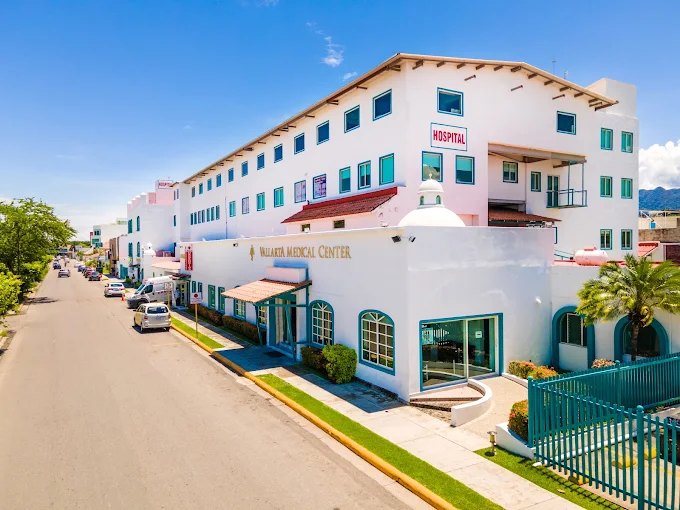
Hospital Vallarta Medical Center
and Hospital Punta Mita.
Certified private hospitals · Puerto Vallarta and Punta Mita
Intensive care and 24-hour emergency department
What actually determines safety
Three things,
and none of them is geography
What's behind the operating room door
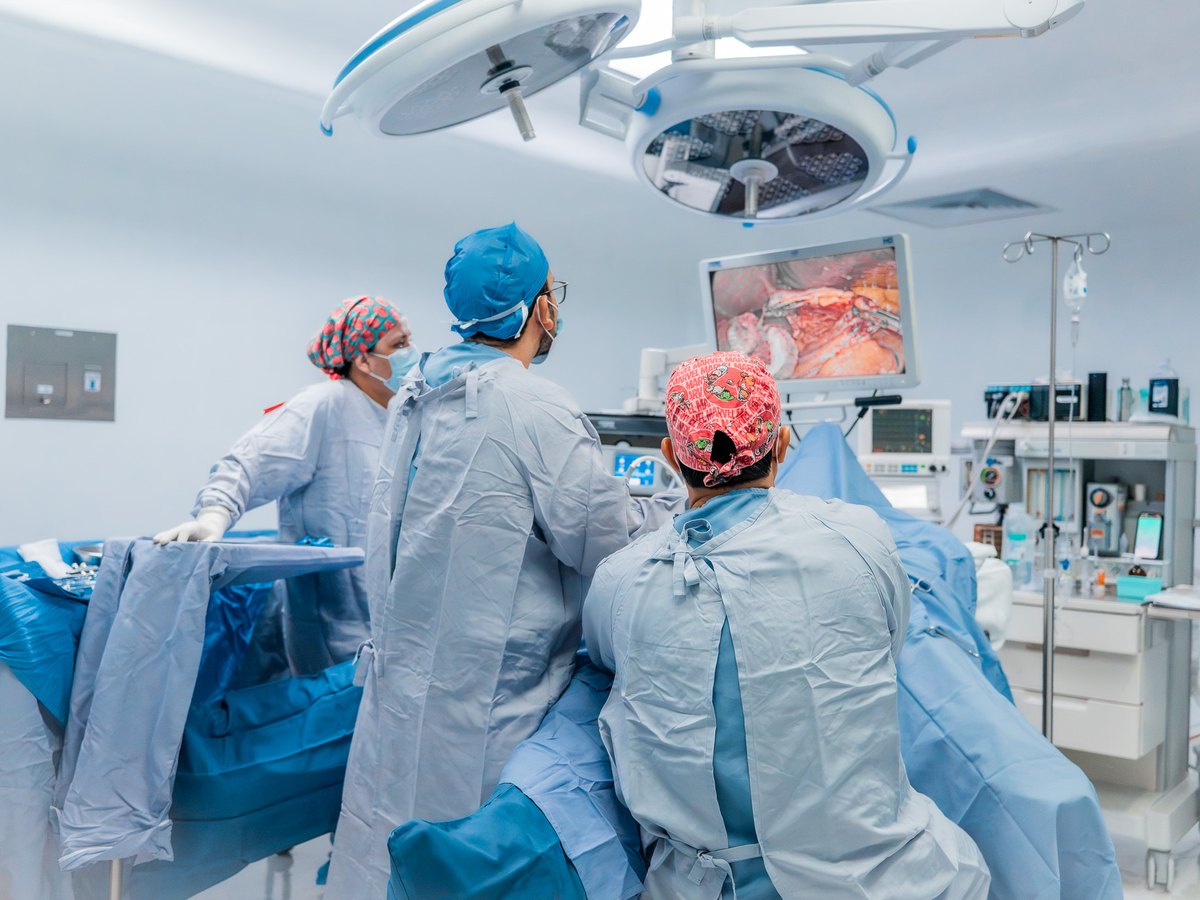
When something goes wrong in surgery — and sometimes it does — what matters is whether there's an intensive care unit, a 24-hour emergency department and on-site imaging and lab in the same building. An outpatient clinic can't offer that, no matter how modern it looks.
Training you can verify
Board certification, specific training in minimally invasive and bariatric surgery, and a license number you can look up yourself. A surgeon who hesitates to share those details has already answered your question.
How the decision is made
The evaluation before surgery, the time between arrival and the operating room, and the plan for after you go home. This is where most medical-tourism problems actually start.
Where the risk really is
The problems aren't about Mexico.
They're about the provider.
When medical tourism goes wrong, it usually follows one of a few patterns. None of them is specific to any country. All of them are specific to how a practice is run.
Surgery the day after you land
A proper evaluation — endoscopy, internal medicine, anesthesia, and cardiology or pulmonology when needed — takes time. A program that operates within 24 hours of arrival is skipping steps, and those steps exist to catch the problems that turn a routine operation into a dangerous one.
Clinics without intensive care
A leak, a bleed or a respiratory complication needs an ICU in the same building, not an ambulance ride across town.
Packages sold by brokers
If the first time you speak to your surgeon is in the pre-op room, you didn't choose a surgeon. You chose a package.
No plan after you fly home
Bariatric surgery isn't finished when you leave the hospital. Nutrition, supplements, lab monitoring and follow-up decide the long-term result, and a program that ends at the airport leaves you on your own for the part that matters most.
How I handle each one
What I do about it
A real evaluation, not a same-day one
Eight specialists review your case. For international patients, the evaluation starts by video and with tests in your home city, and finishes here before a surgery date is confirmed.
Private hospitals only
I operate at Hospital Vallarta Medical Center and Hospital Punta Mita. Not in clinics, and not in facilities without the capacity to respond to a complication.
You speak with me before you travel
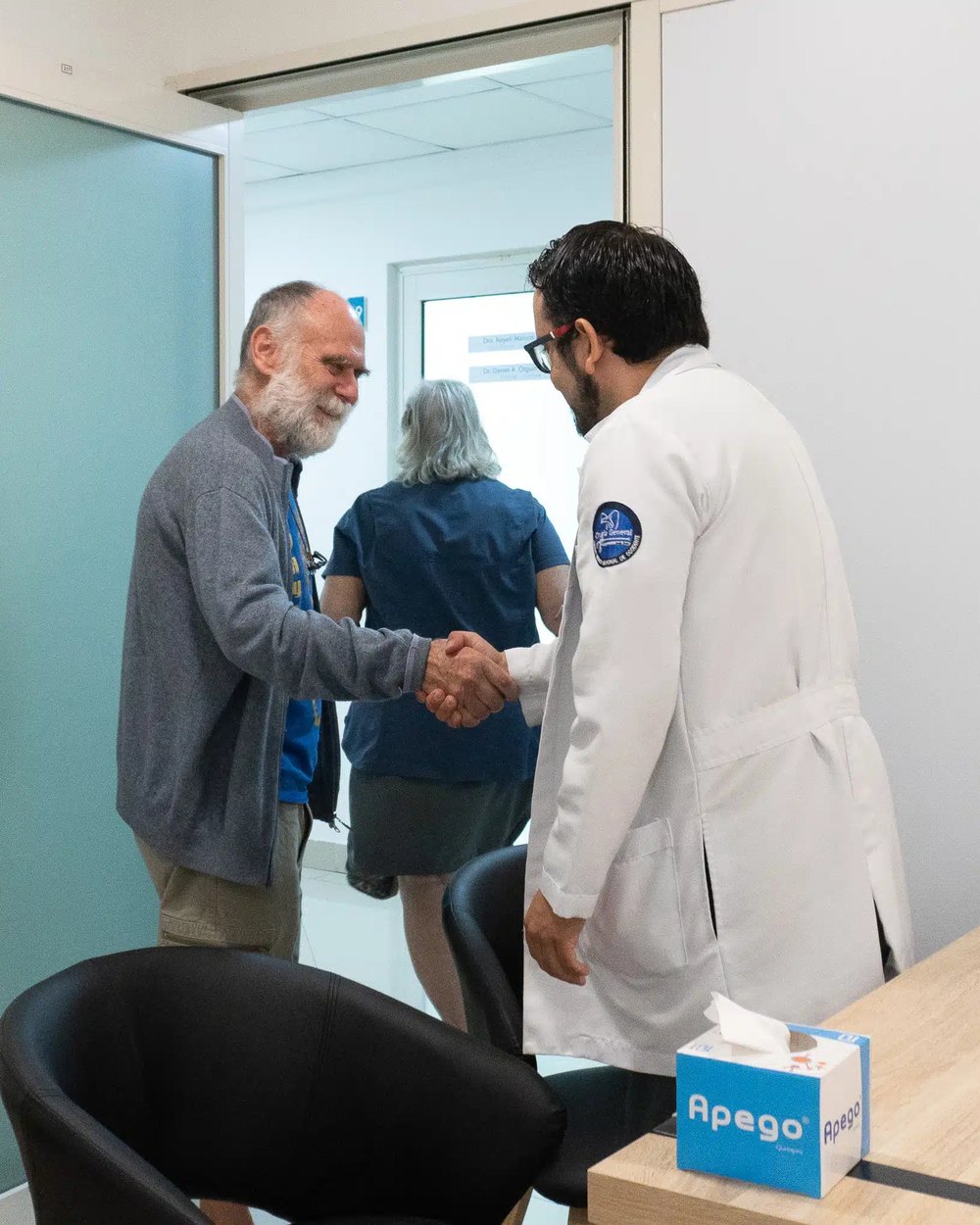
Your first consultation is with me, by video, in English. There is no broker between us.
Follow-up that travels with you
Six months of scheduled follow-up with surgery, nutrition and psychology are included in the price, most of it available by video. You leave with full records in English.
I would rather lose a patient by telling them the truth than operate on someone who shouldn't be on my table.
Questions to ask any surgeon
Here, or anywhere else
Whoever you're considering — in Mexico, at home or somewhere else — these questions separate a serious practice from one that isn't. If you get an evasive answer, that is your answer.
- Will I speak with the surgeon before I travel?Not a coordinator, not a sales rep — the person who will operate on you.
- How many days are there between my arrival and my surgery?If the answer is "the next morning," ask what evaluation happens before then.
- Is there an intensive care unit in the same building?And a 24-hour emergency department.
- Can I verify your board certification and license numbers?A serious surgeon will give them to you without hesitation.
- How many of this specific procedure do you perform?Experience with bariatric surgery in general isn't the same as experience with the procedure you're having.
- What happens if I have a complication after I fly home?Ask for the actual plan, not reassurance.
- Who do I contact at 2 a.m. on day four?A name and a number, not a general inbox.
- Will I receive my complete records in English?Your doctor at home will need them.
Verify, don't trust
My credentials,
so you can check them
In Mexico every physician holds a federal professional license (cédula profesional), and specialists hold a separate specialty license. Both can be looked up by anyone in the Registro Nacional de Profesionistas, run by Mexico's Secretaría de Educación Pública.
- Medical license
- 11043322
- Specialty license (general surgery)
- 11455493
- Board certification
- Mexican Board of General Surgery (Consejo Mexicano de Cirugía General A.C.)
- Specialty training
- General Surgery — University of Guadalajara
- High-specialty training
- Advanced Minimally Invasive Gastrointestinal Surgery — Autonomous University of Guadalajara
- Memberships
- Mexican Association of General Surgery · Mexican College of Obesity and Metabolic Surgery · International Federation for the Surgery of Obesity and Metabolic Disorders (IFSO)
Puerto Vallarta itself
About the destination
Puerto Vallarta is one of Mexico's most visited destinations and home to a large community of U.S. and Canadian residents. The hotel and hospital areas where you'll spend your stay are among the busiest in the city.
Even so, check your government's current travel advisory for Mexico and for the state of Jalisco before you travel. I'd rather you decide with complete information than with a reassurance from me.
Common questions
About safety
Is it safe to have bariatric surgery in Mexico?
It can be as safe as having it at home, and it can also be considerably less safe. The difference isn't the country — it's the hospital, the surgeon and the process. A board-certified surgeon operating in a private hospital with intensive care, after a complete pre-operative evaluation and with a follow-up plan, is a very different situation from a clinic that operates the day after you land.
How can I verify a Mexican surgeon's credentials?
Every doctor in Mexico has a federal professional license number (cédula profesional), and specialists have a separate specialty license. Both can be looked up by anyone in the Registro Nacional de Profesionistas run by Mexico's Secretaría de Educación Pública. Ask for the numbers and check them yourself.
What happens if I have a complication after I fly home?
You leave with your complete records in English and a direct line to our team. We coordinate with your local doctor or emergency department, and serious symptoms should always be seen locally right away. This is also why we recommend a medical-travel complications insurance policy before you travel.
How soon after arriving will I have surgery?
Not the next morning. The final evaluations — including endoscopy and the pre-anesthesia assessment — happen in your first days here, and the surgery date depends on their results.
About this page
Written and reviewed by
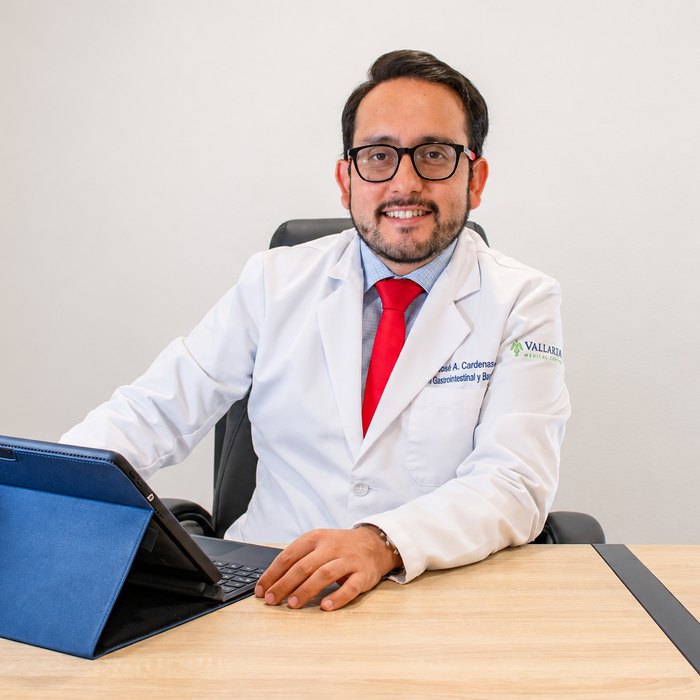
Dr. José Andrés Cárdenas Figueroa
General & bariatric surgeon
Residency in General Surgery at the University of Guadalajara, followed by post-residency high-specialty training in Advanced Minimally Invasive Gastrointestinal Surgery at the Autonomous University of Guadalajara. Staff surgeon at Hospital Vallarta Medical Center and Hospital Punta Mita.
Google reviews
What patients say — unedited
every one of them 5 stars
“Highly recommended. A doctor with a great deal of experience who explains everything in such detail that you get the confidence you need before going into the operating room. Thank you for the empathy, care and monitoring during and after surgery.”
Translated from Spanish · original on Google
“Dr. Cárdenas performed laparoscopic surgery on my mother-in-law to remove her gallbladder, which was already badly infected. His prompt care kept it from getting complicated and, thanks to that type of surgery, she recovered quickly. We highly recommend him.”
Translated from Spanish · original on Google
“Attentive and dedicated, very professional and punctual. I'm very satisfied with the care and how quickly everything moved, from the first consultation to the procedure and the post-op visits. I highly recommend him!”
Translated from Spanish · original on Google
Reviews are shown exactly as patients wrote them on Google, translated from Spanish. We don't write, edit or pay for reviews.
Next step
Ask me anything first
Send me your questions before you decide — about safety, about the hospital, about my experience. That's what the first conversation is for.
WhatsApp is free and works with U.S. and Canadian numbers. We're on Central Time (UTC−6) year-round.