Procedure 02 · Bariatric surgery
Gastric bypass
Roux-en-Y gastric bypass. The stomach is reduced to a small pouch of 20 to 30 milliliters and connected directly to a lower part of the small intestine, bypassing the rest of the stomach and the duodenum.
It's the procedure with the longest documented follow-up in the literature, and still the reference the others are measured against. It works three ways at once: restriction, reduced absorption, and a change in the intestine's hormonal signals.
Before
Whole stomachAfter
Roux-en-Y bypassIn navy, the path food takes. In cyan, the limb carrying digestive juices from the bypassed stomach and duodenum. They join to form the Y. Illustrative diagram.
- 90–150 minApproximate surgery time
- 1–2 nightsIn hospital
- 6–8 daysTypical stay in Puerto Vallarta
- 60–75%Excess weight lost at 2 years*
Who operates on you
Before any surgery date exists,
eight specialists review your case.
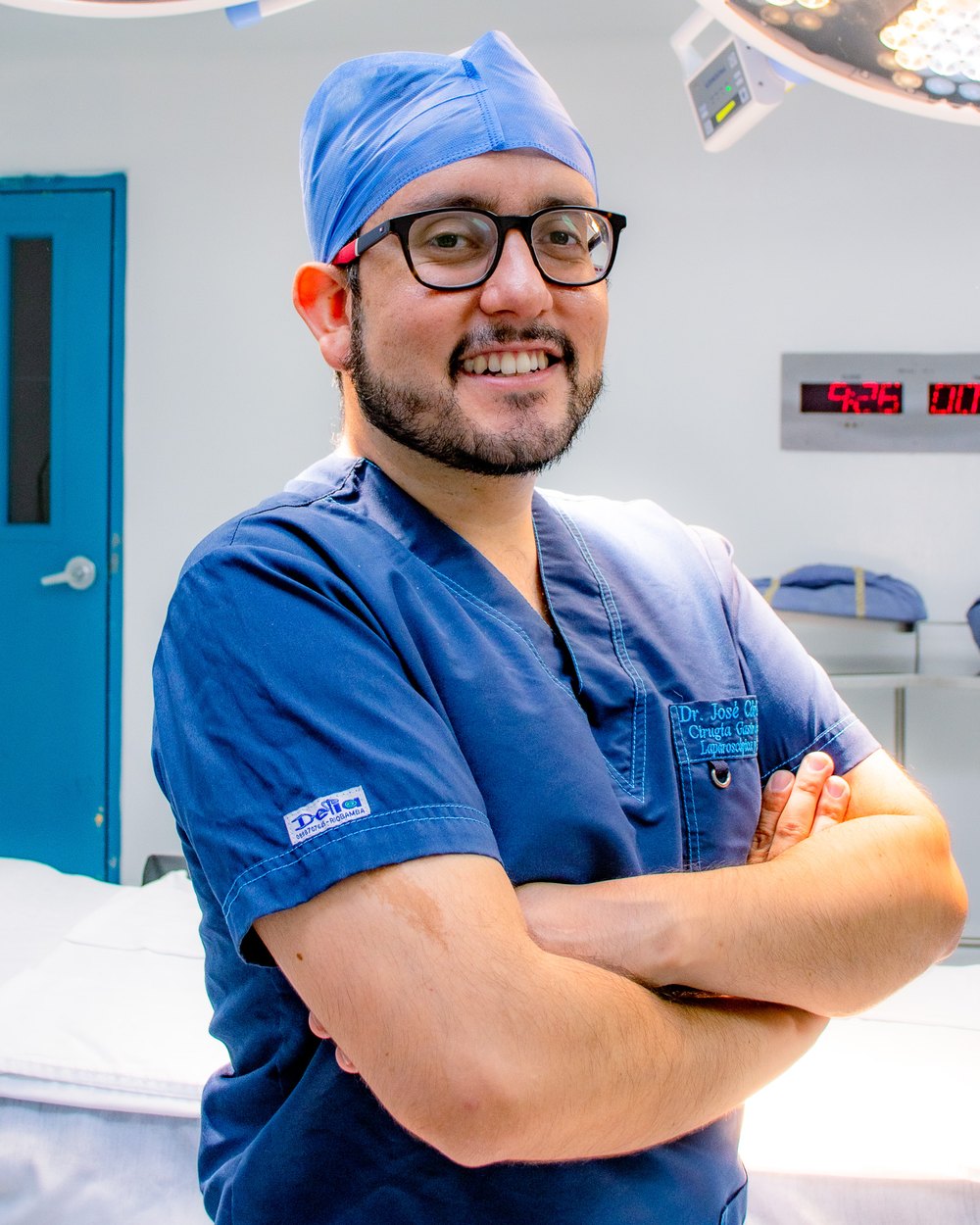
Dr. José Andrés Cárdenas Figueroa · General and bariatric surgeon
Board-certified by the Mexican Board of General Surgery
How it works
Three mechanisms combined
Restriction
The pouch is about the size of an egg. You feel full with very small portions from day one.
Less absorption
Because food skips the duodenum and the first part of the small intestine, it meets bile and pancreatic juices later. Fewer calories are absorbed — and fewer micronutrients, which is why lifelong supplements aren't optional here.
A hormonal change in the gut
Food reaching the lower intestine sooner triggers the release of GLP-1 and other incretins. Blood sugar control often improves before significant weight has been lost. It's the reason a bypass is preferred for hard-to-control type 2 diabetes.
And one specific advantage
Unlike a sleeve, a bypass improves gastroesophageal reflux. If you have esophagitis or a significant hiatal hernia, this is the main reason I may recommend a bypass even if you came asking for a sleeve.
The procedure
What happens on the day
Done laparoscopically: five or six incisions of less than a centimeter, without opening the abdomen.
Admission and preparation
You arrive fasting. An IV is placed, blood-clot prevention is given, and the anesthesiologist does a final check.
General anesthesia
You're fully asleep, with continuous monitoring.
Laparoscopic access
Small incisions and CO₂ to create working space.
Creating the pouch
The top of the stomach is divided to form a 20–30 ml pouch, separated from the rest of the stomach, which stays in place.
The two connections
The pouch is joined to the small intestine and, further down, the limb carrying digestive juices is connected, forming the Y. This is the most technically demanding part.
Leak check and closure
The connections are tested, the gaps in the intestinal mesentery are closed to prevent internal hernias, and the incisions are closed.
Recovery
What to expect, day by day
- Day 0
Recovery and first steps
Pain is managed through the IV. You'll walk within hours — it prevents clots and helps with gas.
- Day 1
Contrast study and first sips
A contrast X-ray checks both connections. With a normal result, clear liquids begin.
- Day 1–2
Discharge
You leave walking, tolerating liquids, with written instructions and a direct number.
- First week
Relative rest
Tiredness and low appetite are normal. Short walks several times a day, no lifting.
- Day 6–8
Post-op check and flight
Wound and tolerance review, supplements confirmed. Once cleared, you fly home.
- Weeks 2–4
Back to normal life
Most people return to desk work within 10 to 14 days.
Is it right for you
When a bypass is the option,
and when it isn't
A bypass is usually right if
- You have severe reflux, esophagitis or a significant hiatal hernia
- You live with hard-to-control type 2 diabetes
- Your BMI is high and the largest sustained loss is the goal
- You already have a sleeve and regained weight or developed reflux
- You can commit to lifelong supplements and labs
Consider another option if
- You take medications whose absorption must not change
- You have inflammatory bowel disease or a history of complicated ulcers
- Long-term follow-up isn't realistic for you
- You smoke and don't plan to stop — the ulcer risk rises sharply
This decision isn't made by reading a web page. It's made with your endoscopy, your labs and your medical history on the table — which is why the evaluation exists.
What also has to be said
Bypass-specific risks
Leak at a connection
The most serious complication. Uncommon, but it must be caught early — hence the contrast study before discharge.
Marginal ulcer
An ulcer where the pouch meets the intestine. Smoking and anti-inflammatory drugs are the main triggers, and both must be avoided for good.
Dumping syndrome
Discomfort, sweating, palpitations and diarrhea after simple sugars. Unpleasant, and managed through diet.
Internal hernia
The intestine can slip through spaces created during surgery, sometimes years later. Prevented by closing those spaces. Severe, persistent abdominal pain always needs to be checked.
Nutritional deficiencies
More than with a sleeve: iron, B12, calcium, vitamin D and folate. Prevented with lifelong supplements and labs.
Alcohol sensitivity
Alcohol is absorbed faster and at higher levels, and the risk of problem drinking rises. Addressed with psychology during the evaluation.
After discharge, contact us immediately if you have
Fever, abdominal pain that's getting worse, a racing heart at rest, shortness of breath, persistent vomiting or inability to keep liquids down. If you're already home, go to your local emergency department first, then call us.
For patients who travel
Flying home after surgery
The main concern on a flight after abdominal surgery is a blood clot in the legs. The risk is manageable, and these steps are what manage it:
- → You fly only after you've been cleared at your post-op check.
- → Book an aisle seat and walk the aisle about once an hour.
- → Wear the compression stockings we give you for the whole trip.
- → Keep sipping fluids throughout the flight, in small amounts.
- → Take any blood-thinning medication exactly as prescribed.
If you notice calf pain or swelling in one leg, chest pain or shortness of breath — during the flight or in the days after — seek emergency care immediately where you are.
Cost
What a gastric bypass costs
Bariatric surgery starts at $6,500 USD. A bypass is more complex than a sleeve and costs more; you get the exact figure, itemized, after your video consultation.
Common questions
About the gastric bypass
Is a gastric bypass reversible?
Technically yes, because the bypassed stomach stays in place. In practice it's reversed very rarely, and only for specific complications. Decide assuming it's permanent.
What is dumping syndrome?
Discomfort, sweating, a racing heart and diarrhea when simple sugars reach the intestine too quickly. It's common early on and is controlled through diet. Many patients end up seeing it as an ally that keeps them from old habits.
Will it cure my diabetes?
The right word is remission, not cure. A large share of patients with type 2 diabetes are able to stop or reduce medication, often before significant weight loss, because of the hormonal effect. Remission can last years, and can be lost if weight returns.
Can I take anti-inflammatory painkillers afterwards?
Not routinely. Drugs like ibuprofen and naproxen sharply increase the risk of an ulcer at the new connection. If you need long-term pain management, we plan an alternative.
Can I drink alcohol?
Alcohol is absorbed faster and reaches higher levels after a bypass, and the risk of developing problem drinking goes up. The general advice is to avoid it for the first year and to be very moderate afterwards.
How many days do I need to stay in Puerto Vallarta?
Plan on 6 to 8 days: final evaluations, surgery, one to two nights in hospital and a post-op check before your flight.
About this page
Written and reviewed by
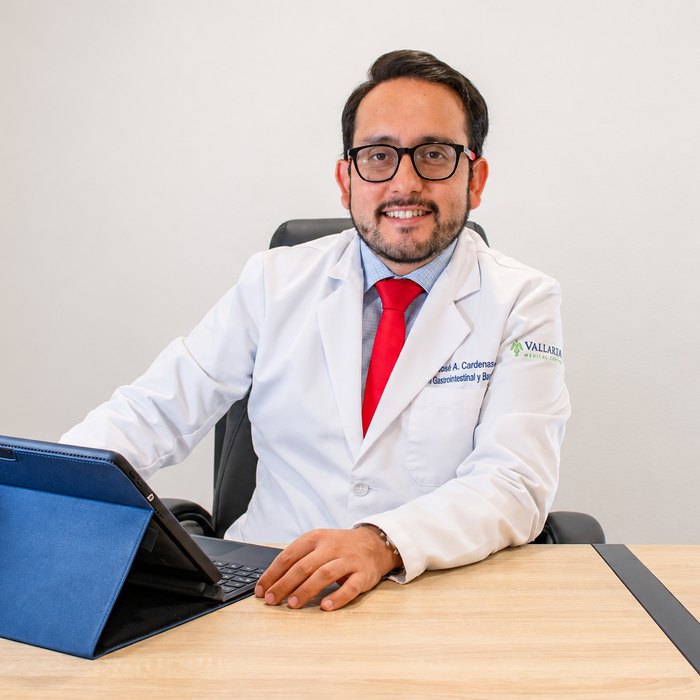
Dr. José Andrés Cárdenas Figueroa
General & bariatric surgeon
Residency in General Surgery at the University of Guadalajara, followed by post-residency high-specialty training in Advanced Minimally Invasive Gastrointestinal Surgery at the Autonomous University of Guadalajara. Staff surgeon at Hospital Vallarta Medical Center and Hospital Punta Mita.
Google reviews
What patients say — unedited
every one of them 5 stars
“Highly recommended. A doctor with a great deal of experience who explains everything in such detail that you get the confidence you need before going into the operating room. Thank you for the empathy, care and monitoring during and after surgery.”
Translated from Spanish · original on Google
“Attentive and dedicated, very professional and punctual. I'm very satisfied with the care and how quickly everything moved, from the first consultation to the procedure and the post-op visits. I highly recommend him!”
Translated from Spanish · original on Google
“Dr. Cárdenas performed laparoscopic surgery on my mother-in-law to remove her gallbladder, which was already badly infected. His prompt care kept it from getting complicated and, thanks to that type of surgery, she recovered quickly. We highly recommend him.”
Translated from Spanish · original on Google
Reviews are shown exactly as patients wrote them on Google, translated from Spanish. We don't write, edit or pay for reviews.
Next step
Is a bypass right for you?
Let's find out
Tell me about your case in a couple of lines. A consultation doesn't commit you to surgery.
WhatsApp is free and works with U.S. and Canadian numbers. We're on Central Time (UTC−6) year-round.